There is a common misconception that because Michigan Secure Capital Group paid certain personal expenses during my time with the company, I was somehow being fully compensated for my work.
The documentary record tells a very different story.
Beginning in late 2024, after Viral Solutions exhausted its financial resources supporting MSCG’s operations, my financial support was gradually reduced to the payment of essential living expenses while I continued leading the company’s marketing efforts.
At the same time, Viral Solutions continued providing websites, branding, hosting, software, operational infrastructure, and executive marketing services that MSCG relied upon daily.
This article documents how that arrangement developed, why it existed, and how those same utility payments later became the subject of dispute.
The Collapse of Viral Solutions’ Cash Flow
By June 2024, Viral Solutions had reached the end of what it could financially sustain.
For months, I had continued funding operations, paying staff, maintaining software subscriptions, and supporting Michigan Secure Capital Group while relying on repeated assurances that funding was imminent.
Eventually, there was nothing left.
My team was laid off because I no longer had the resources to continue meeting payroll.
Although the employees were gone, the work did not stop.
I continued performing the responsibilities myself while maintaining the systems and infrastructure that Michigan Secure Capital Group depended upon.
Keeping the Lights On
By October 2024, my financial situation had deteriorated to the point that basic household utilities were becoming difficult to maintain.
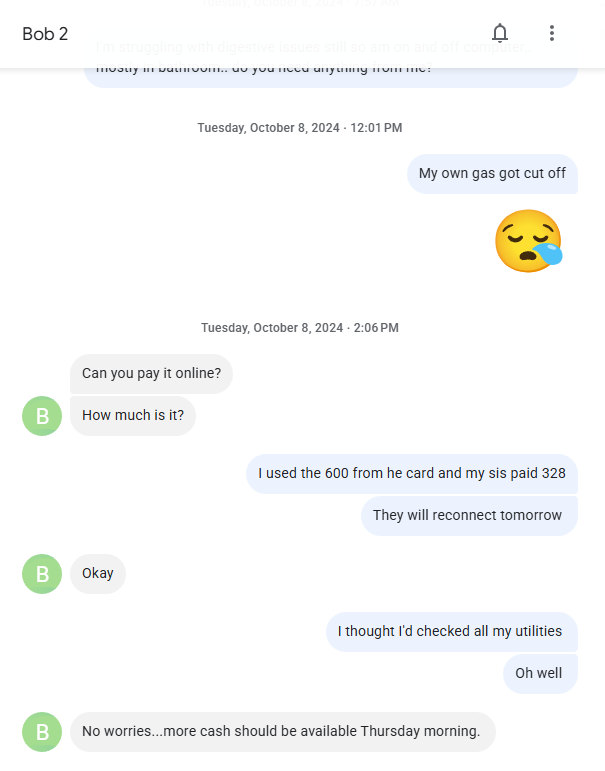
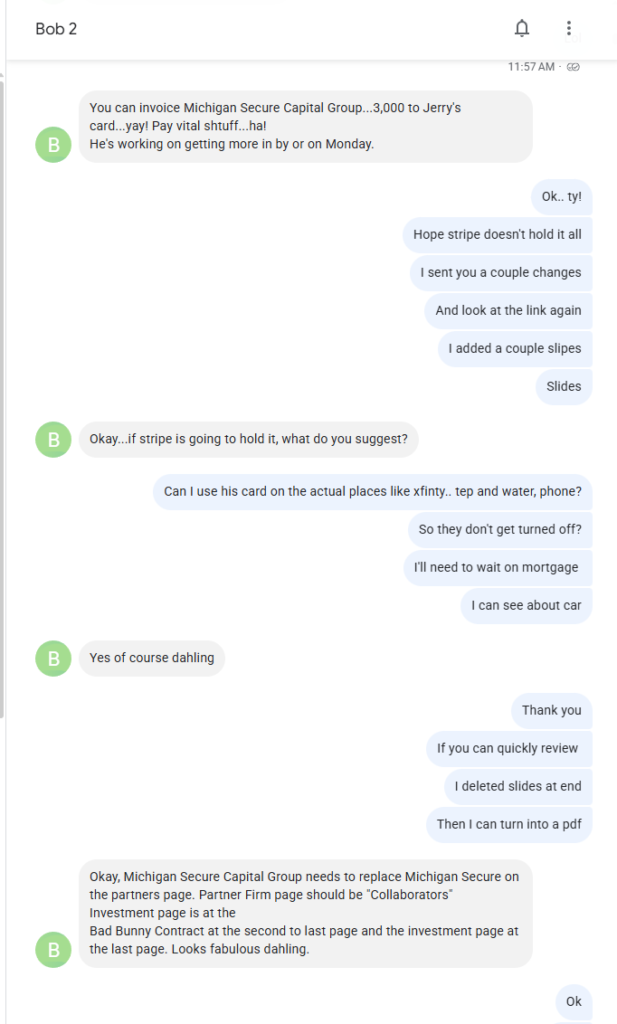
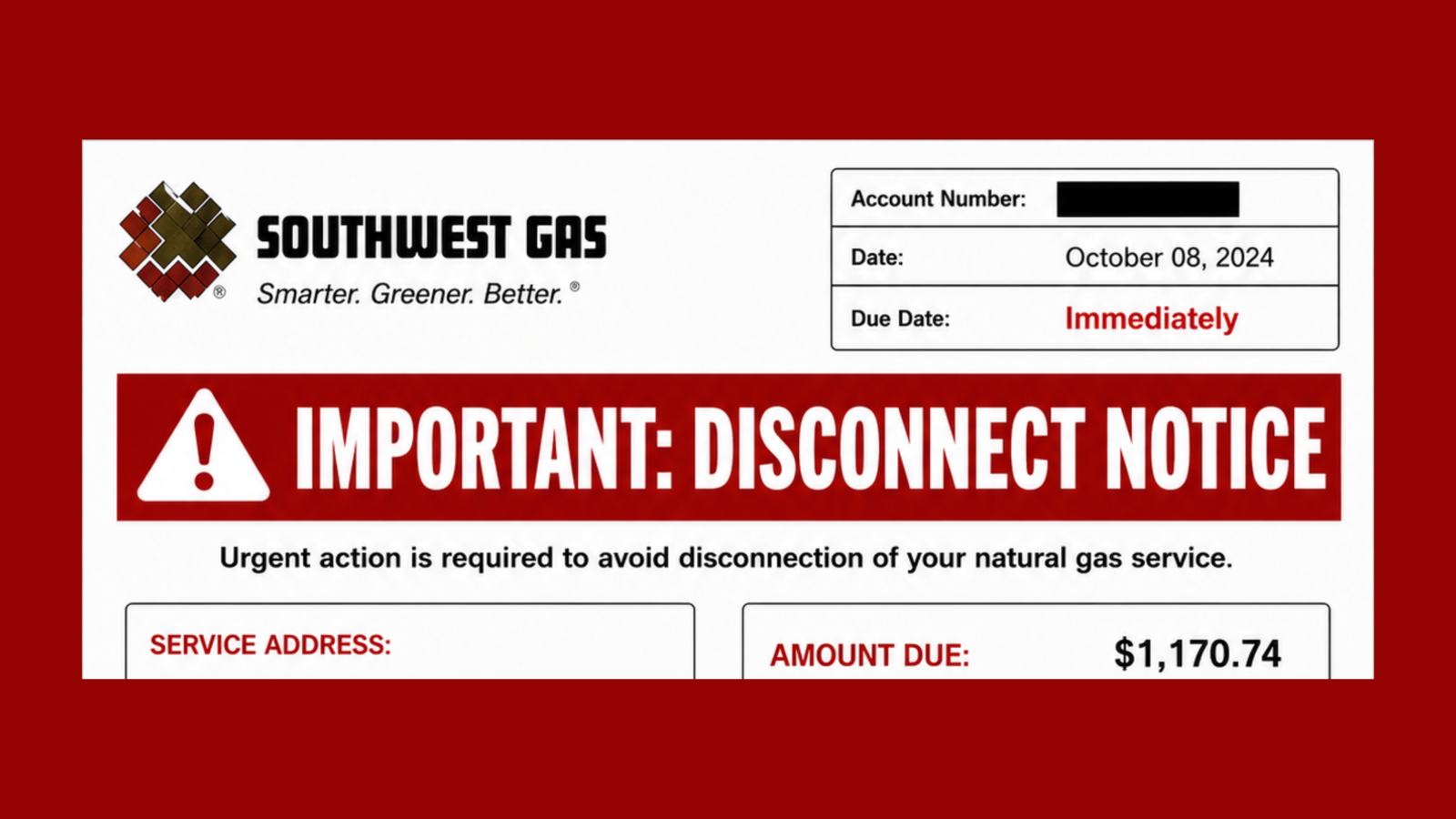
On October 8, I informed Bob Morales that my household gas service had been disconnected.
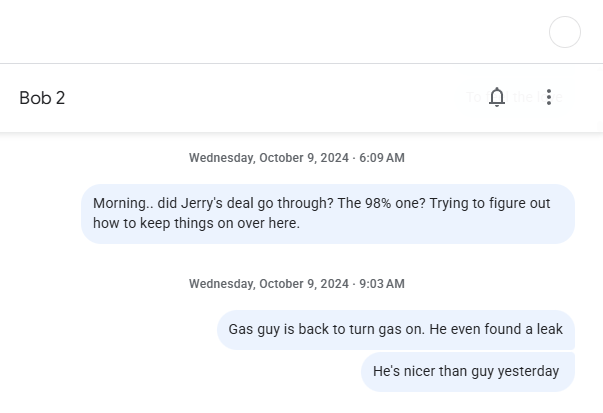
The following morning I asked whether Jerry Rizqallah’s funding had come through because I was trying to determine “how to keep things on over here.”
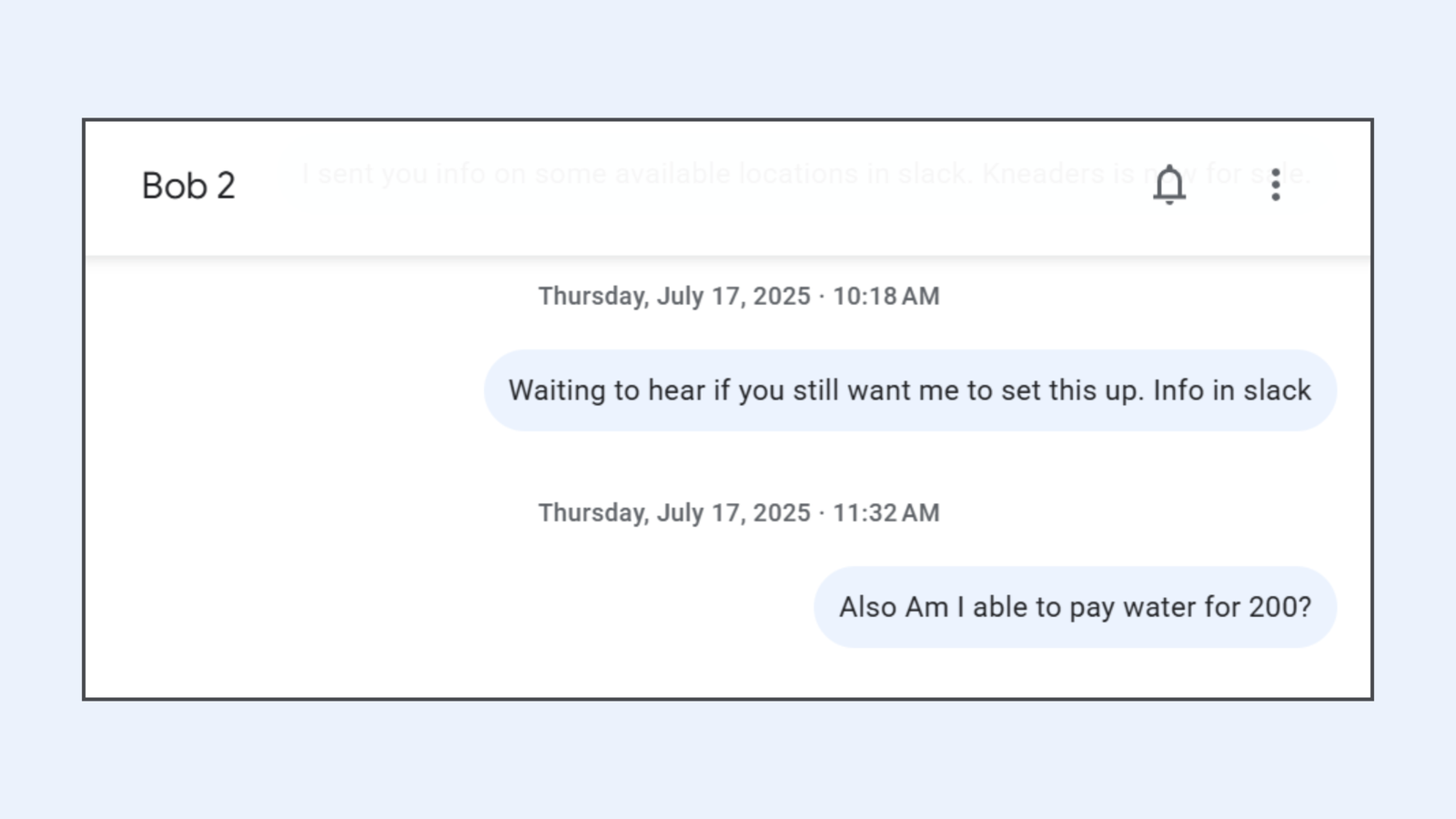
On October 10, I asked Bob whether I could use Jerry’s company card to pay:
- Xfinity
- Tucson Electric Power (TEP)
- Oro Valley Water
- my phone
“…so they don’t get turned off.”
Bob responded:
“Yes of course dahling.”
Immediately afterward, our conversation returned to Michigan Secure Capital Group business.
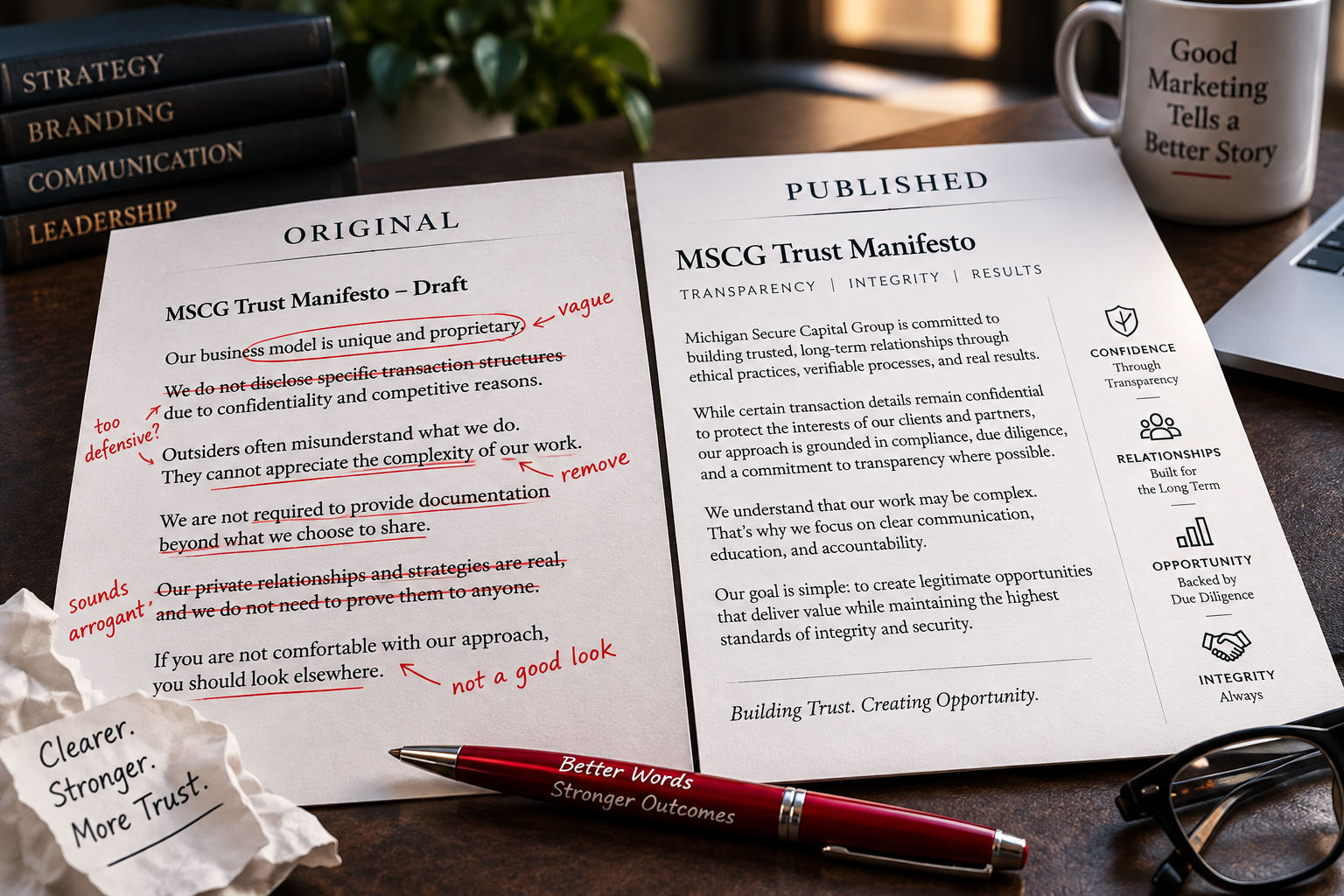
We discussed website revisions, investment pages, confidentiality language, presentations, and ongoing marketing projects.
That exchange illustrates the reality of this period.
While continuing to perform executive-level marketing work, I was simultaneously trying to ensure that my household utilities remained connected.
My Compensation Became Survival Expenses
Beginning in late 2024, Michigan Secure Capital Group began covering certain expenses that allowed both my work and my household to continue operating.
Those payments included, at various times:
- electricity
- water
- internet
- cell phone
- occasional groceries
- occasional prescription costs
- occasional vehicle payments
During portions of that same period, MSCG also covered office rent, Cloudways hosting, Google Workspace, and other operational expenses associated with the infrastructure Viral Solutions maintained for the company.
These payments were never presented as my final compensation.
They existed while payroll remained pending and while outstanding agency obligations accumulated.
“I Cannot Continue Like This”
By November 2025, the arrangement had become unsustainable.
I wrote to Bob explaining that I had reached the end of my financial rope and required stability in order to continue effectively serving as Chief Marketing Officer.
My request was straightforward.
I requested:
- $3,000 per month toward housing.
- $2,500 per month for basic living expenses.
- Continuation of the existing commitments for office rent, hosting, Google Workspace, JotForm, and other operational systems supporting MSCG.
Bob initially interpreted my email as though I intended to leave the company and began discussing transferring websites and infrastructure to the technical team.
I immediately clarified that I was not resigning.
The issue was financial—not my commitment to the company.
Written Confirmation of the Existing Arrangement
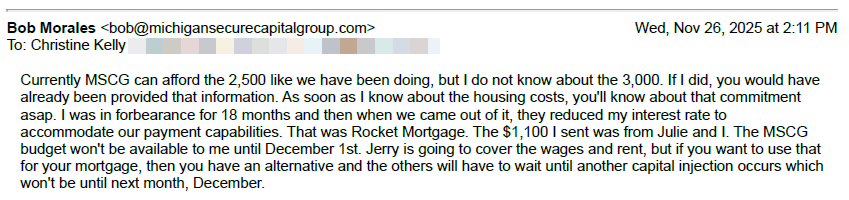
On November 26, 2025, Bob replied:
“Currently MSCG can afford the 2,500 like we have been doing, but I do not know about the 3,000.”
That sentence confirmed two important facts.
First, there was already an established $2,500 monthly support arrangement.
Second, the only issue under discussion was whether MSCG could also provide the additional $3,000 needed for housing.
The existing support itself was not being questioned.
The Infrastructure Dispute
By late 2025, early 2026, Michigan Secure Capital Group was demanding administrative access to infrastructure owned and maintained by Viral Solutions LLC, including Cloudways hosting, websites, Google Business, and other systems that had been built, licensed, and paid for through my company.
I declined to transfer administrative control.
My position was straightforward: Viral Solutions remained an independent company, the infrastructure remained its property, and substantial agency fees, reimbursements, and other outstanding obligations remained unpaid. Until those obligations were addressed, I was not prepared to transfer control of Viral Solutions’ assets.
That disagreement marked a turning point in our relationship.
The Existing Arrangement Ended
Shortly after I declined to transfer administrative control of Viral Solutions’ infrastructure until the outstanding agency obligations had been addressed, the financial arrangement that had existed for more than a year came to an end.
For many months, Michigan Secure Capital Group had continued paying approximately $2,500 per month toward my essential living expenses while I continued serving as Chief Marketing Officer and operating Viral Solutions on the company’s behalf. Bob Morales acknowledged that arrangement in his November 26, 2025 email, writing:
“Currently MSCG can afford the 2,500 like we have been doing…”
By February 2026, my financial situation had already reached a critical point.
My mortgage was no longer merely at risk—it was in foreclosure. I had exhausted my savings, lost my team, accumulated substantial personal debt while continuing to support MSCG, and was facing the very real possibility of losing my home.
It was against that backdrop that the existing utility arrangement ended.
The payments that had previously been treated as part of the ongoing support arrangement suddenly became the subject of dispute, and Michigan Secure Capital Group advised that they would no longer continue paying them.
The Same Payments Later Became “Unauthorized”
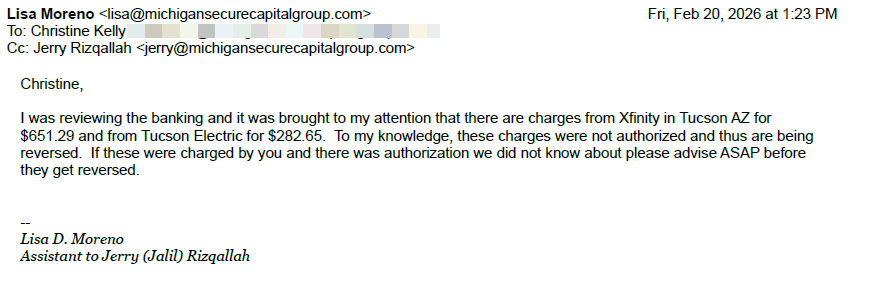
On February 20, 2026, Lisa Moreno notified me that payments made to Xfinity and Tucson Electric Power had been identified as unauthorized and would be reversed unless I could demonstrate prior authorization.
Exhibit A – February 20, 2026
Email regarding proposed reversal of previously authorized utility payments.
I responded immediately.
I advised Lisa that Bob had already authorized those payments in his November 26, 2025 email.
Lisa requested that I forward the email for her records.
I declined to do so because the authorization originated with Bob himself. My position was that the company could obtain that authorization directly from the individual who had issued it.
Exhibit B – February 20, 2026
Response identifying Bob Morales’ prior written authorization.
Over the following days, Lisa advised that Jerry intended to proceed with reversing the charges if proof was not provided.
Exhibit C – February 23, 2026
Notice that the charges would be reversed absent proof of authorization.
At that stage, the dispute was no longer about utility bills. It occurred after my home had already entered foreclosure and after I had refused to surrender control of Viral Solutions’ infrastructure while substantial agency obligations remained unpaid.
Reconciling the Accounts
When I later reconciled the individual utility accounts, the records showed a more nuanced outcome than I had initially believed.
The available records indicate that:
- the Tucson Electric Power payment remained credited;
- the Oro Valley Water payment also remained credited;
- the Xfinity account was later closed, and Xfinity issued a refund to the payment method associated with the account. Based on the records currently available, I cannot conclusively determine whether that refund resulted from the account closure, the previously threatened reversal, or another account adjustment.
Because this website is intended to document events accurately, I believe it is important to distinguish between what was threatened and what the available records presently demonstrate.
The Human Cost
The dispute over utility payments did not occur in isolation.
By that point, I had already exhausted my personal savings, lost my marketing team, accumulated significant personal debt, entered mortgage forbearance, and was facing foreclosure while continuing to build Michigan Secure Capital Group’s marketing department and infrastructure.
During the January 6, 2026 executive meeting, I tried to explain the reality of the situation:
“Would you like me to lose my house to foreclosure? Is that the blood that I’m supposed to bear for this company and the promises that have been made?”
Earlier in that same discussion I had warned:
“Jerry, I will lose my house if it takes that amount of time. What are you guys going to do?”
These were not rhetorical questions.
They reflected the financial reality I was living while continuing to perform executive marketing responsibilities for MSCG.
Looking Back
This article is not about utility bills.
It is about what those utility bills represented: the point at which an executive responsible for building an entire marketing department had been reduced to wondering whether the lights would stay on.
For more than 2 years, while continuing to build Michigan Secure Capital Group’s marketing department, websites, investor presentations, branding, operational systems, and communications infrastructure, my day-to-day financial stability depended largely on whether essential household expenses would be paid.
Those payments were never a substitute for the executive compensation, agency fees, or reimbursement obligations that had accumulated over the course of the relationship.
Instead, they became the practical means by which I continued working while waiting for the payroll, funding, and reimbursement structure that was repeatedly represented as imminent.
The emails, text messages, invoices, and account records presented throughout this website document that progression and allow readers to evaluate the chronology for themselves.